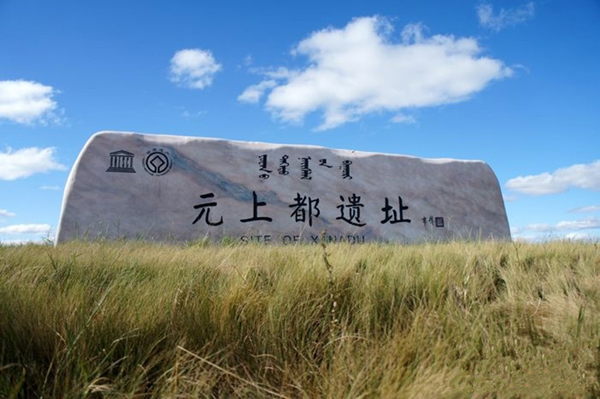
Site of Xanadu
Overview
The Site of Xanadu, also known as Yuan Shangdu (Upper Capital of the Yuan Dynasty), is an archaeological site located in the Xilin Gol League of the Inner Mongolia autonomous region, China. It was the summer capital of the Yuan Dynasty (1271-1368) under the reign of Kublai Khan, the grandson of Genghis Khan. The city started construction in 1256 and was officially finished in 1263, with its design attributed to Liu Bingzhong, a Chinese advisor to Kublai Khan. Xanadu was an attempt to integrate Mongolian nomadic culture with that of the Han Chinese, creating a unique blend of architectural and cultural elements.
The site is strategically located north of the Great Wall and designed according to the principles of traditional Chinese feng shui, taking advantage of its proximity to nearby mountains and a river. Xanadu encompasses the remnants of an imperial city and includes structures such as temples, palaces, tombs, and nomadic encampments. Key features include the Tiefangang Canal and various other waterways that highlight the importance of water management in the city’s planning.
Historical Significance
Xanadu represents a significant period in Chinese history when Mongolian and Han Chinese cultures interacted and blended during the Yuan Dynasty. The city served as a pivotal location for religious and cultural exchanges, notably influencing the spread of Tibetan Buddhism across Northeast Asia. As such, Xanadu holds a place of prominence in the historical narrative of cultural fusion and religious dissemination.
The city was also a hub of political and economic activity, serving as a base from which Kublai Khan expanded the Yuan Empire across Asia. Archaeological evidence and historical documents authenticate Xanadu's role in the interchange between Mongolian and Han peoples, reflected in the city’s design, layout, and construction.
Archaeological Findings
The archaeological excavations at Xanadu have uncovered substantial evidence of the city’s grandeur and complexity. These findings include the ruins of significant buildings such as the Muqing Pavilion, where rulers hosted grand banquets. Additionally, the discovery of residential neighborhoods, government offices, warehouses, and barracks speaks to the city’s multifaceted urban functions.
The layout of Xanadu demonstrates an impressive understanding of water management, evidenced by the remains of the Tiefangang Canal, which was part of large-scale water control projects aimed at protecting the city. Artifacts and remnants found at the site provide insight into the lives of its inhabitants and their interactions with their environment.
Cultural Heritage
Designated as a UNESCO World Heritage Site on June 29, 2012, Xanadu embodies the historical and cultural exchange between nomadic and agrarian civilizations. The site’s remnants stand as a testament to the architectural and cultural achievements of the Yuan Dynasty, showcasing the adaptability and synthesis of diverse cultural elements. The city’s planning, centered around feng shui principles, reflects the harmony sought between human settlements and their natural surroundings.
Xanadu’s historical legacy also includes its role as a venue for religious debates and as a destination for foreign travelers whose accounts have inspired generations. The site’s connection to the Mongol Empire and Tibetan Buddhism further underscores its global significance.
Natural and Cultural Landscape
Situated on the Mongolian Plateau, Xanadu is set against the scenic backdrop of the Xar Tala globeflower prairie and Xandii Gool wetlands, near the Shandian River and Shangdu River. The site’s geographical setting provided the Mongol rulers with a pristine environment for horse riding and hunting during the summer months, staying true to their nomadic roots.
Today, the surrounding natural landscape of Xanadu remains largely intact, preserving the environmental setting and the spatial feeling of the grassland capital. The site continues to be a point of interest for historians, archaeologists, and tourists alike, offering a glimpse into a pivotal era of cultural convergence in Chinese history. Article reference1. Amid the ruins of an ancient capital, nature holds sway. chinadaily.com.cn. 20222. Site of Xanadu. chinadaily.com.cn. 2019Photo Gallery(1 picture)CategoriesCultural HeritageTagWorld Heritage in ChinaTangible Cultural HeritageArchaeological ParkCatalogue1. Overview2. Historical Significance3. Archaeological Findings4. Cultural Heritage5. Natural and Cultural Landscape- - - []








